
Chinatown Bangkok
Chinatown and Yaowarat make up the final stretch of the walk I do most often in Bangkok, after Talat Noi and Song Wat. Walk from Song Wat into the market and you feel the difference straight away: more noise, more smells, more people.
By Tim van Dellen, who lives in Thailand and regularly travels to Bangkok
Into the market
This is where Bangkok grabs you. The smell of spices, scooters passing within inches of you. What strikes me every time is how many shops here sell exactly the same things, on the same street, and yet they've all been here for years. There must be room for everyone who's good at something.
Eating on Yaowarat
My favourite stop is JOK One Table: a few tables in a small alley, a mention in the Michelin Guide, and dumplings packed with prawn, garlic and soy sauce. It literally started with one table, which is where the name comes from.
On Yaowarat itself, I never skip Guay Jub Ouan Pochana: rolled rice noodles in a spicy, peppery broth with crispy pork belly, also listed in the Michelin Guide.
Further down another alley, an 81-year-old man has spent his whole life selling just one thing. Siu mai, three baht each, made from the same recipe as his father used. No menu, no choice, no rush. He serves them one by one with a cocktail stick.
Shanghai Mansion
Fancy a cold beer? Shanghai Mansion is more than 130 years old. It was once a Chinese opera house, a stock exchange and a textile business. Now it's a hotel where live jazz often plays on the street-side terrace in the evening.
Soi Nana, the last stop
I finish the walk in Soi Nana, the small street next to Chinatown. During the day, Wallflowers is a flower shop with a café. Once it gets dark, it turns into a rooftop bar. On Friday evenings there's often a good live band from 21.00, and you can eat here just as well as you can have a cocktail.
A few doors down is Ba Hao, where I come back almost every time. Small, intimate, and they don't try to do everything here, just the things they're good at. The owner trained as a chef at the Mandarin Oriental. Think ginseng Negroni, duck wontons, then finish with the sesame dessert.
Practical
Start around four in the afternoon. That way you reach Chinatown just as Yaowarat starts to come alive. Bring water, it's hot, and check the opening hours of the smaller places beforehand. They do change from time to time.
For me, this is usually the final part of a walk that takes three to four hours together with Talat Noi and Song Wat. The full story covering all three neighbourhoods is on What to Do in Bangkok, and you can also follow it as a ready-made route with its own Google Maps list in 3 Hours, 3 Neighbourhoods Bangkok.
Bangkok Unlocked
You now know how I experience Chinatown myself. Want to find this kind of place across the rest of the city, not just here? Bangkok Unlocked already has them mapped out.
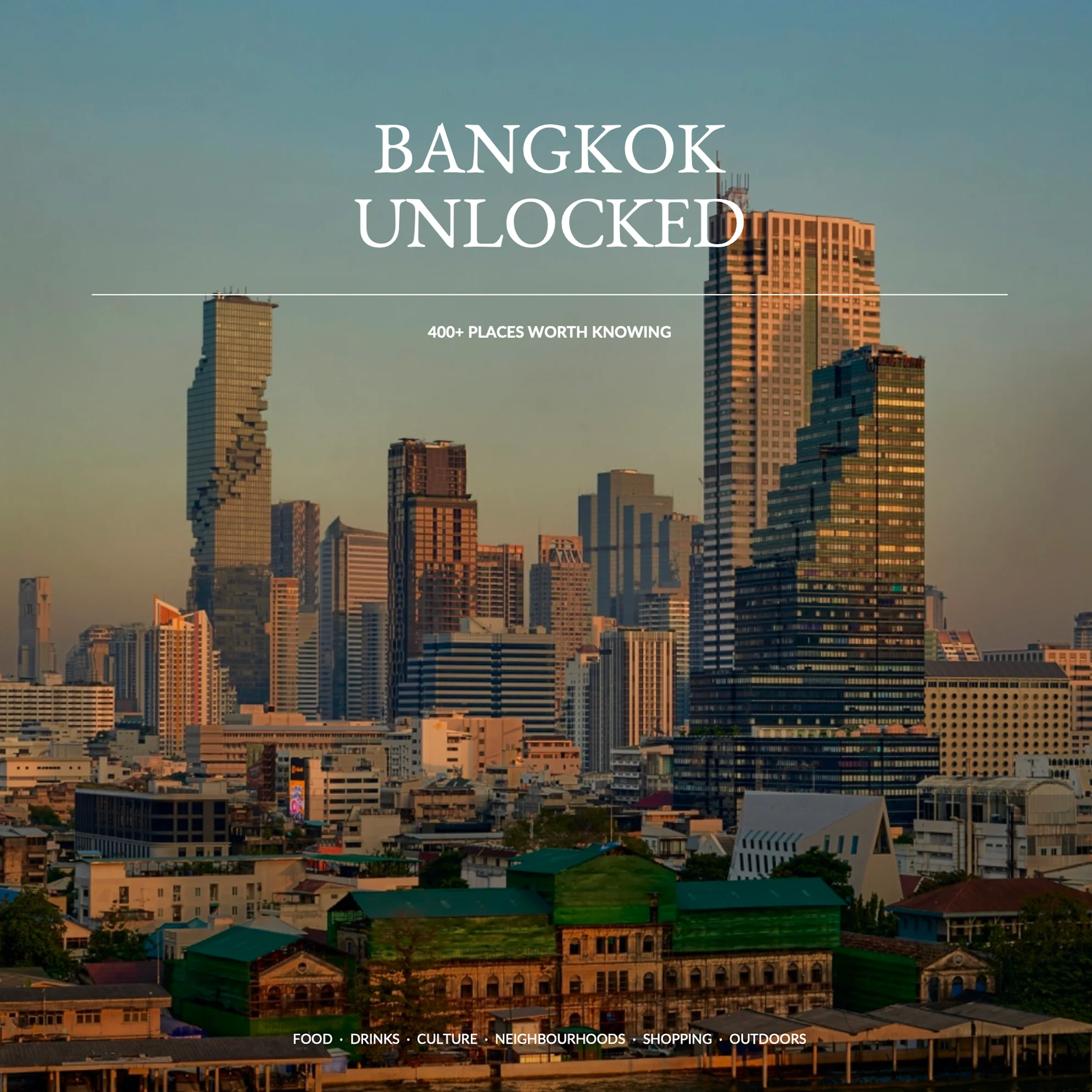
400+ PLACES WORTH KNOWING
Bangkok Unlocked
400+ carefully selected places for food, drinks, culture, outdoors and shopping. Spread across Chinatown, Talat Noi, Thong Lo and beyond.
View Bangkok Unlocked →